
Making your horse care more self-sufficient has some real perks, especially if you like the idea of lowering your costs, depending less on outside supplies, and knowing exactly what goes into your horses’ daily routines. I’ve learned a lot about how small changes in feeding, shelter, grazing, and daily upkeep can help you become more independent as a horse owner. Here, I’m sharing the main approaches I’ve found helpful for anyone looking to be less reliant on commercial feed stores, constant hay deliveries, and routine outside help.
The Basics of Self-Sufficient Horse Keeping
Self-sufficient horse keeping means you’re trying to handle most of your horse’s care, shelter, and feed needs on your own property. While you still might buy in some essentials like salt or certain minerals, you aim to produce most of what your horses need right where you are. This makes a big difference when supply chains get sketchy or prices go up at the feed store.
The key parts of self-sufficiency include managing your own pasture, growing at least some of your own hay or forage, collecting water when possible, and finding ways to recycle waste, like manure. All these pieces come together to keep your horses healthy and reduce your reliance on outside purchases. Over time, you also develop a deeper understanding of your horses’ natural needs, because you’re more involved in their daily routine and care cycle.
Self-sufficiency doesn’t mean isolation. It’s about building a system that fits your land and lifestyle—one that lets you be more resilient when things outside your control, like bad weather or a sudden rise in feed prices, come up. That kind of peace of mind is worth working toward.
Setting Up for Self-Sufficiency: Land, Fencing & Shelter
Before you start, it’s smart to think about your land. Bigger isn’t always better; what matters is quality of pasture, smart rotation, and reliable fencing. Here’s what’s worked for me and folks I know:
- Pasture rotation: Splitting your fields into several sections and rotating horses through them helps grass regrow naturally. Horses get fresh forage, and it breaks up parasite cycles. Aim for 2–4 paddocks to rotate through the year, adjusting as needed to the seasons.
- Simple shelters: Run-in sheds made from sturdy wood or metal keep your horses sheltered without a ton of expense. You can use recycled materials or even stacked straw bales for quick windbreaks.
- Water collection: Rain barrels attached to your barn roof or shed can top up water troughs in the wet season. Good pasture usually needs reliable water access, so double-check your layout if you’re setting up from scratch.
- Sturdy fencing: Rotational grazing is tough to manage without decent fencing. I use electric polywire with solar chargers for temporary paddocks because it’s easy to move without fancy gear or heavy equipment.
Remember, the setup doesn’t need to be fancy. Many folks start with what they have and add improvements over time. Even temporary fencing or secondhand materials can work well while you’re sorting out your long-term plan.
Grazing & Forage: Growing Your Horses’ Food
Grass is your best friend if you want to be self-sufficient, but it needs careful management. Most horses can get what they need from pasture during the greener months as long as the grass is handled properly and there’s not too much overgrazing. A well-managed pasture can support your horses for much of the year and cuts down on feed bills significantly.
- Pasture seeding: Over seeding bare spots in early spring or fall with horse friendly forage mixes keeps your fields productive. I’ve had good luck with varieties that hold up to hoof traffic like orchard grass and timothy. White clover is a legume that adds nitrogen and fills gaps.
- Weed control: Hand pulling or mowing before seeds set will do more for your fields than you might expect; horses will avoid unpalatable weeds if there’s good grass to graze.
- Hay making: Growing your own hay isn’t possible everywhere, but setting aside a patch to mow and dry once a year can help you store some winter feed. Hay sheds or tarped stacks are pretty effective for home storage and help keep the quality good through the off-season.
- Browse and native plants: Planting shrubs like willow or Siberian pea and letting horses nibble on hedges gives them extra fiber, minerals, and variety. If you’re tight on space, planting hedgerows does double duty for shelter and snacks, while supporting insect life and biodiversity.
The more you know about your local soil and climate, the better choices you can make about forage types. Not every area supports the same grasses, but most have hardy species suited to horses. Learn from local farms and extension agents, and don’t be afraid to experiment on a small scale.
Water & Natural Resource Management
Having a reliable water source is really important for horses all year. Self-sufficient systems often use more than one method to keep troughs filled and clean:
- Rain collection: Set up barrels or small cisterns to catch rainwater. Many people use first-flush diverters to keep debris out. In dry spells, a well or reliable creek is super helpful.
- Gravity fed troughs: If your land allows, troughs at the low end of a gentle slope can be fed from higher tanks at no cost. Just let gravity do the work.
- Water conservation: Good trough placement and float valves help avoid waste and keep things topped up automatically.
Keeping water accessible, clean, and unfrozen in winter can be a challenge, so plan to insulate troughs or use heated buckets in cold climates. Harnessing rainwater and using simple technology can make things work even if the power goes out.
Composting & Manure Management
One of the first things I realized is just how much manure a couple of horses can produce. Turning that waste into a benefit saves money on fertilizer, keeps bugs down, and improves your pasture over time. Manure composting is one of the true cornerstones of a farm system—turning a waste problem into a valuable resource.
- Compost bins or piles: Throw manure and soiled bedding in a properly managed pile. If you keep it aerated and moist (but not soaking), it breaks down into rich compost. After a few months, you can spread it on your fields to boost your soil for next season’s growth. Composting costs nothing but a little effort and has big returns.
- Natural fertilizer: Homemade compost can replace the need for bagged fertilizer. Apply finished compost to your hay field, garden, or pasture in early spring or fall for best results and to lock nutrients into the soil.
- Weed and parasite management: Hot composting (reaching at least 130°F inside the pile) kills many weed seeds and parasites, which helps keep fields healthier each year.
Managing manure the right way is better for the environment, and over time your soil comes alive, growing stronger grass for your animals. Plus, you save money and reduce the fly population near the barn.
Reducing Grain & Feed Store Dependence
A lot of us get in the habit of buying big bags of grain or pelleted feed, but it’s possible to dial this back, especially for easy keepers or horses at maintenance (not in hard work or breeding). Prioritizing homegrown forage and basic supplements can shrink your dependence on store-bought feeds. Many horses need little more than quality hay or pasture with free-choice minerals to thrive.
- Forage first: Horses do best on diets based around grass and hay. You might only need to supplement with a basic vitamin/mineral product or salt lick, which are easy to store in bulk.
- Homemade mashes: Soaking homegrown oats, barley, or beet pulp can be a handy winter treat, but check with your vet to make sure it’s right for your horse. Add chopped veggie scraps or apple peels for extra flavor—just make sure everything is horse-safe.
- Local feed sources: If you need some concentrate feed, buying from local mills or co-ops supports your community and often gets you fresher products.
Cutting down on processed feed saves money and helps your horses stay healthy on simpler diets. Watch their condition closely, especially in changing seasons, and adjust as needed. If you need to, join forces with neighbors for bulk buys or co-op deliveries of minerals and salt.
Practical Daily Routines
Getting your day-to-day routine streamlined can make self-sufficient horse care manageable, especially if you’re short-handed or doing most chores on your own. Here are a few things I do that really help:
- Regular checks: Walk fences, check water troughs, and make sure shelters hold up. You’ll spot trouble early and save yourself headaches in the long run.
- Prep work: Setting hay out for the next day, filling water before dark, and having tools handy means I’m not scrambling in bad weather or after dark. Organization goes a long way.
- Emergency plans: For power outages or droughts, I keep extra water barrels and flashlight batteries. Even just a tarp to cover hay can save a rainy day. Having spares is a small thing that pays off big in crunch time.
Questions & Answers: Making Self-Sufficiency Work
These are a few of the most common things people ask me about self-sufficient horse care:
Question: What’s the first step to making my horse care more self-sufficient?
Answer: Focus on your pasture and setup. Healthy grazing, good shelter, and water access are at the heart of the whole system. Even just improving pasture rotation can make a big difference right away.
Question: Do I need special equipment for self-sufficient horse keeping?
Answer: Not really. You do best with some sturdy fencing, basic compost bins, and maybe a push mower or scythe for small hay patches. Many people use materials they already have, like pallets or barrels for water.
Question: What about minerals or supplements?
Answer: Most horses will do well on good pasture with free-choice salt and sometimes a mineral lick, especially in the winter. It’s a good idea to get your soil tested or talk with a local extension agent if you’re aiming for totally homegrown feed.
Everyday Examples: How Self-Sufficiency Works in Real Life
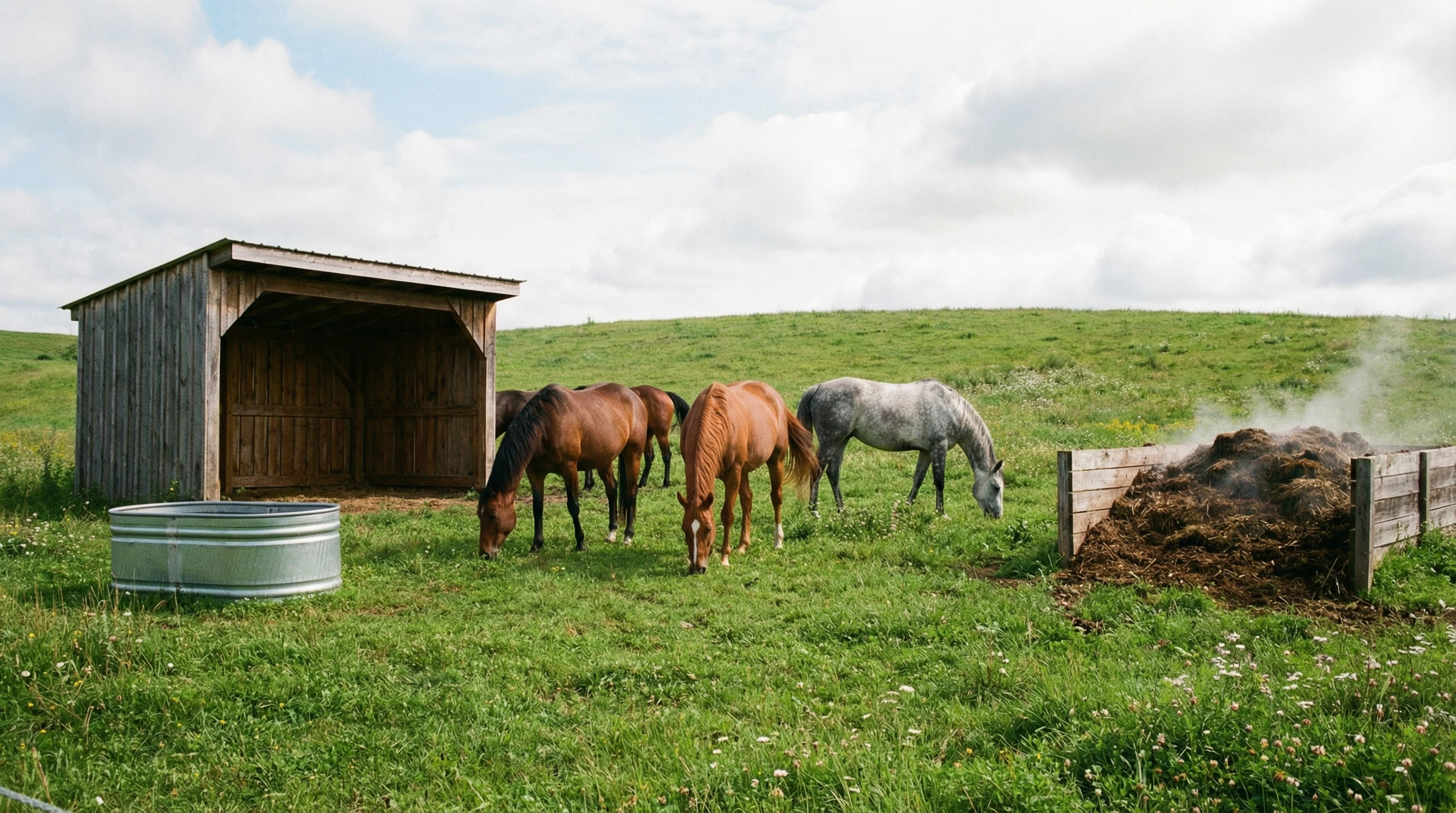
If you step onto a farm where the owners handle most horse needs themselves, you’ll probably spot a few things right away: simple three-sided shelters, hay drying, and compost piles steaming gently behind a row of trees. You might see a few basic tools tucked behind the barn; nothing too fancy, just what you need to do the job.
- Pasture based care: One family I know uses a small herd to mow their yard and fertilize at the same time, turning horses into a natural lawn crew. Even on a few acres, pasture rotation and a compost pile keep the cycle moving smoothly.
- Homegrown hay: Another small operation grows a single annual cut of grass hay that lasts through the winter, topping it up with purchased bales only if the season is especially tough. They store hay under tarps with good airflow to keep it dry. Note, I wouldn’t recommended tarping for long-term storage.
- DIY water management: Some folks take advantage of sloped ground to set up gravity fed water systems, which keep troughs filled without pumps; just water tanks and a bit of creativity.
Going self-sufficient with horse care might sound old-school, but it’s a practical way to reduce costs, skip a few feed runs, and keep your horses happy on your own land. Even trying a few of these techniques can make a difference, so don’t be afraid to start small and build from there. You may end up enjoying the close connection with your horses and your land that comes from this hands-on style of care. Over time, as your system takes hold, you’ll probably notice healthier pastures, happier horses, and a healthier wallet too. Self-sufficiency isn’t about perfection—it’s about progress, adaptability, and finding what works best for your little corner of the world. Give it a try and see how much you can grow, both as a horse owner and a land steward. Bottom line: taking even small steps toward self-sufficiency pays off and can be a satisfying, rewarding path for you and your horses.