Putting together an equine first aid kit is one of those tasks that can really save the day, or at least give you peace of mind during horse emergencies. Horses tend to get into minor accidents, and having a well-stocked kit nearby means you can handle cuts, scrapes, colic symptoms, or even just a lost shoe with a lot less stress. I’m walking through the basics here to help you feel ready, whether you ride for fun or you care for a barn full of horses.
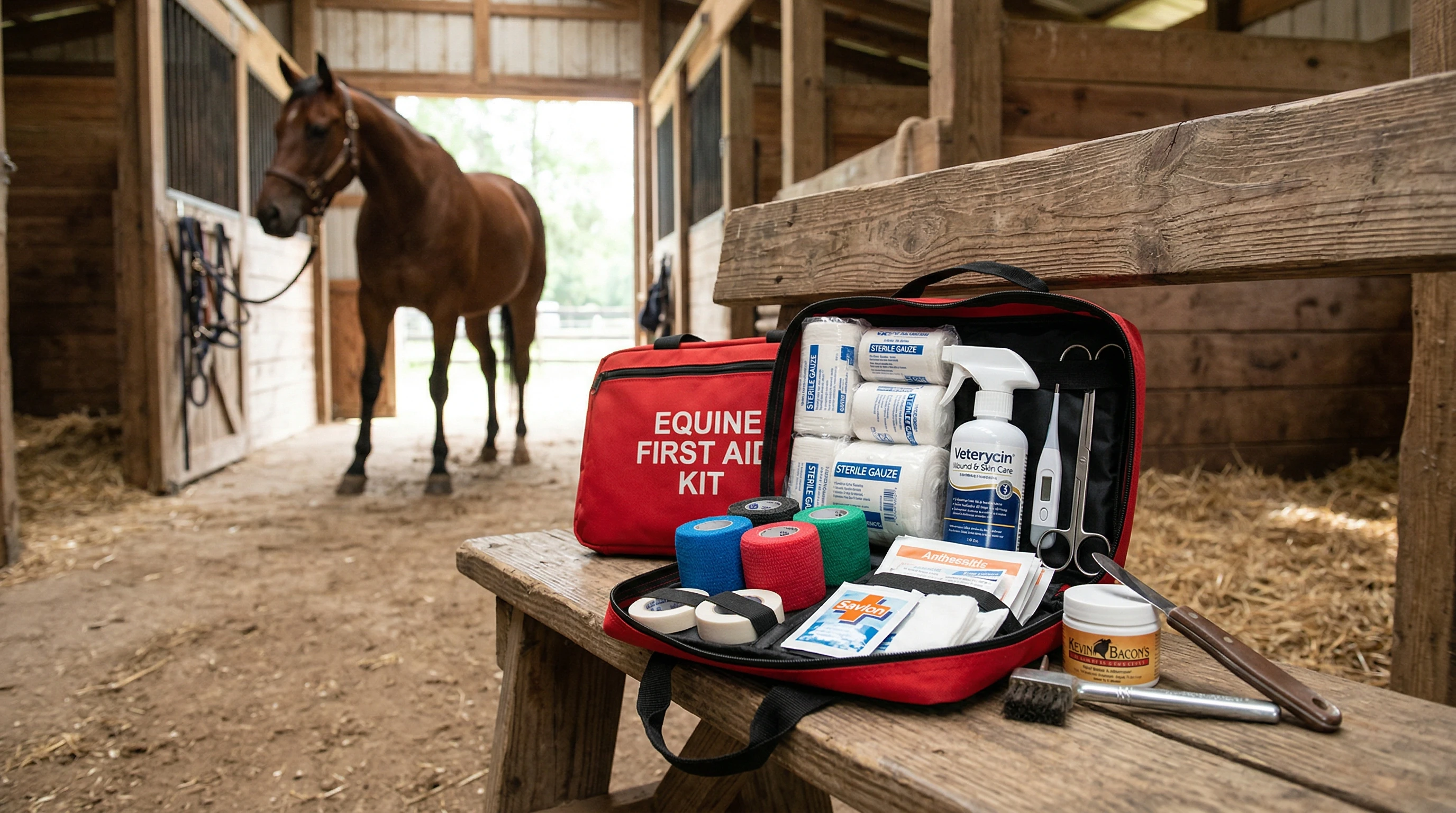
Essential Items for Every Equine First Aid Kit
Some things belong in every horse owner’s first aid kit, no matter your budget or the level of riding you do. These are the items I grab most often, and everything listed here pretty much covers the basics for quick care on the trail, around the barn, or at a competition.
- Nonstick wound pads and gauze: Great for covering wounds and absorbing blood without sticking to the injury.
- Vet Wrap (self-adhesive bandages): Super handy for wrapping injuries or holding dressings in place. It’s flexible and easy to rip by hand.
- Duct tape: Not just for fixing things around the barn. It’s the go-to for making hoof bandages.
- Antiseptic wound cleaner: Something like Betadine solution, saline, or chlorhexidine for flushing and cleaning wounds.
- BluKote or similar spray: Helps prevent infection and keeps bugs away from small cuts and scrapes.
- Scissors and hoof pick: For trimming bandages and dealing with foot problems in a pinch.
- Digital thermometer: Easy to use, especially if you notice your horse not quite right and want to check for a fever.
- Latex or nitrile gloves: Helpful for keeping germs away from wounds and your hands protected from medications or bodily fluids.
- Small flashlight or headlamp: Makes it way easier to check wounds or feet in low light or at night.
- Clean towels or small rags: For cleaning up messes, drying hands, or adding extra pressure if needed.
Optional Extras and Nice-to-Have Supplies
Beyond the basics, some useful items can make your kit better prepared for trickier situations. These are things I keep on hand for just-in-case moments, but you can always add them over time:
- Stethoscope: For folks comfortable monitoring their horse’s heart rate or listening to gut sounds when colic is suspected.
- Instant ice packs: Great for injuries that need quick cooling, especially if you’re away from a freezer or barn fridge.
- Large syringes (without needles): For flushing wounds, dosing meds, or administering electrolyte paste.
- Electrolyte paste or powder: Useful when a horse is sweating a lot or feeling off during hot weather.
- Triple antibiotic ointment: A good layer of protection for minor cuts, especially after flushing them out.
- Diapers or sanitary pads: Sounds random, but they make awesome cushions for hoof injuries and absorb a ton.
- Extra halter and lead rope: For securing an injured horse or swapping out gear if yours breaks during an emergency.
- Wire cutters: If you have fencing with wire, these can help free a horse caught up quickly and safely.
- Emergency contact info: Write down your vet’s number and any backup contacts you trust. Don’t count on your phone battery in the heat of a crisis.
Budget Kit vs. Complete Kit: What Should You Choose?
Building the perfect equine first aid kit depends on your budget, your level of comfort with horse health, and how remote your riding or boarding situation is. Here’s a quick breakdown for either approach.
Budget Friendly First Aid Kit
On a budget, stick to the essentials described above. Gauze, vet wrap, basic antiseptics, scissors, thermometer, and gloves will handle most problems. Many barn supply stores sell pre-filled first aid kits at a discount, but it’s usually cheaper to buy these items individually. Even with a budget kit, make sure all supplies are kept dry and not expired.
All-in-One First Aid Kit
If you want to be really prepared or you live far from your vet, a more complete kit includes both essential and optional items, plus things like stethoscopes, extra medications (with your vet’s advice), electrolyte pastes, specialty hoof packing, and splint materials. You’ll also want to have enough supplies to treat more than one horse if you manage a herd. Some folks keep a duplicate kit in their trailer, so they’re covered off-property too.
How These Kits Actually Get Used (Real-Life Scenarios)
It’s one thing to have all the right gear, but it’s another to know how and when to use it. Here are a few situations I’ve run into where a well-organized first aid kit has made a real difference:
- Pulled Shoe or Hoof Injury: Horses lose shoes more often than you might think, especially during trail rides. Wrapping the hoof with a diaper, vet wrap, and duct tape keeps it clean and protected until a farrier arrives.
- Minor Lacerations: Horses are masters at finding sharp edges. With nonstick pads, vet wrap, and antiseptic, you can clean, cover, and protect the wound on the spot so it stays clean.
- Colic Symptoms: When a horse acts off, it’s important to act fast. A thermometer and stethoscope help check temperature and gut sounds, so you can give the vet accurate info right away. Walking a colicky horse while waiting for the vet is also a standard step.
- Allergic Reactions: Swellings or hives can pop up quickly. Having antihistamines (with your vet’s prior instruction) can buy you time while you call for help.
In every scenario, having the right tools on hand means a horse gets care quickly, and you can keep situations from escalating before professional help arrives.
How to Store, Organize, and Maintain Your Kit
All your effort goes to waste if your first aid kit is a jumbled mess or supplies are expired. I like using a sturdy plastic box or a backpack for portability. Label everything and keep a checklist taped inside so it’s easy to see what needs refilling. Go through your supplies every few months to toss anything that’s used up or out of date, especially things like ointments and medications. Store the kit in a dry place within quick reach, ideally, somewhere you’d pass heading out to check the horses so it’s not forgotten in a frantic moment.
Tell anyone who helps out at your barn or property where the kit is stored and what’s inside. A quick walk through makes a big difference, especially if you might not be around during an emergency.
Frequently Asked Questions About Equine First Aid Kits
What’s the best way to learn how to use first aid supplies?
Working with your veterinarian or taking a basic equine first aid course is a really solid move. Lots of local horse groups or extension offices offer classes, and hands-on practice is way better than guessing when a horse is hurt.
Can I use human first aid products on horses?
Some basic supplies, like nonstick pads and wraps, work for both people and horses. Antiseptic and ointments can often be shared, but always check if they’re safe for horses. Some substances burn or irritate their skin.
How often should I check my kit for expired items?
Every three to six months is a good time frame, especially since barns get hot and cold, which can break down products faster.
Final Thoughts
An equine first aid kit isn’t just for serious emergencies. It’s the kind of everyday barn tool that can help with small problems before they turn into big ones. The right kit is individualized, so start with the basics, build as you go, and always get advice from your vet if you’re not sure about a product or what to do in an emergency. All it takes is being prepared so you can respond quickly and calmly when your horse needs you most.
Leave a Reply