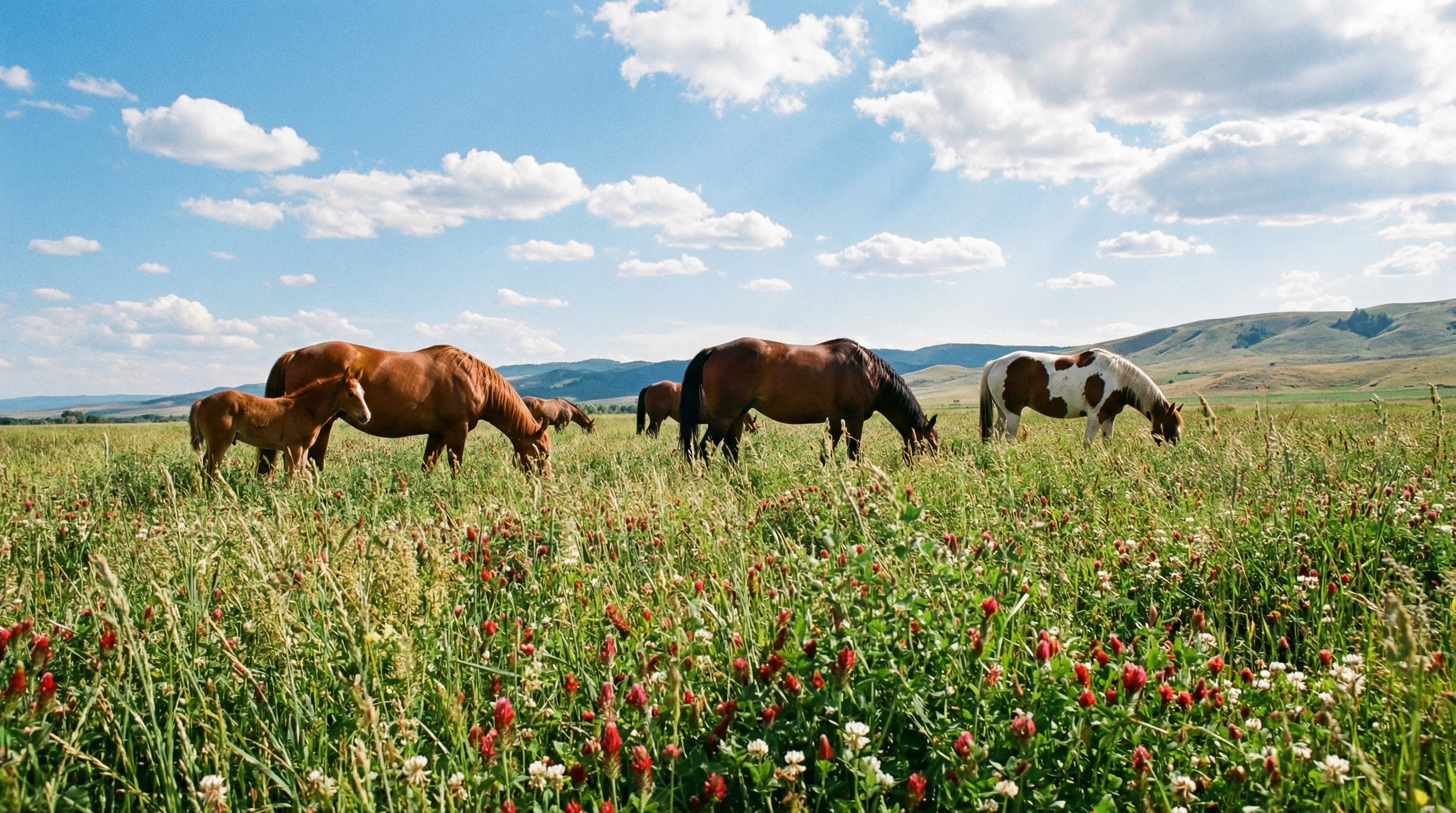
 Supplying horses with enough protein is super important for muscle building, energy, and overall health. This matters a lot, especially for broodmares, young horses, and performance horses. Not every pasture naturally packs a protein punch. The right forage choices give your horses what they need without relying too heavily on pricey concentrates or supplements, letting you keep things healthy, balanced, and cost-effective.
I’ve picked up a lot along the way researching forage options for both small and large acreage. From choosing which seed to plant to figuring out how much is too much of a good thing, it all comes down to balancing quality, maintenance, and what fits your farm life best. Here’s a full breakdown on growing high protein horse forage that keeps your herd healthy and your land thriving. Whether you’re managing a family pony paddock or a large breeding operation, the basics I’m outlining here will help every kind of horse owner step up their pasture game.
What Makes Forage High in Protein?
High protein horse forage refers to the leafy, green plants you grow and feed your horses. Think pasture grass and legumes, which pack more protein per bite. Protein is vital for muscle growth, healthy hooves, coat condition, and is especially critical for broodmares, foals who are growing fast, or horses that are working hard.
Top High Protein Forage Crops for Horses:
- Legumes like alfalfa and clover – Usually have the highest protein content, often ranging from 15% to 22% depending on harvesting and maturity.
- Cool season grasses such as orchard grass, rye grass, and timothy – Generally lower protein than legumes, but with good fertilization and management, they can reach 12% to 16%.
- Blended pastures – A mix of legumes and grass helps even out the protein, reduces risk of over consumption, and improves pasture sustainability.
Alfalfa is widely known as the highest protein forage option, but clover blends (like red or ladino white clover) are also great. Keep in mind that weather, soil, and where you live will affect how well these grow on your property. If your farm is in a cooler or wetter area, clover and grass blends may outperform alfalfa, delivering solid protein and sustainability over several seasons.
How Much Protein Do Horses Actually Need?
Most mature horses in light work only need forage that’s about 8% to 12% protein. Growing foals, lactating mares, or racehorses need more—somewhere closer to 12% to 16% (sometimes slightly higher for unique cases). Too little protein can make horses lose muscle and appear less healthy. Too much can also cause minor issues (I’ll get to that shortly), but overall, most horses do well with protein levels suited to their age and workload.
If you’re not sure how much protein you’re growing, hay or pasture analysis from your local ag extension office can be very helpful and doesn’t cost much. This is the best way to be sure of the nutrient value of what you’re feeding, letting you adjust your management and feeding plan based on real numbers, not just guesswork. Remember, accurate protein levels are critical for maintaining top condition without overspending on concentrates.
Planning and Seeding Your Pasture for High Protein
The backbone of any good, high protein forage program is planning ahead. That means picking the right seeds for your land, prepping your soil, and getting plants established at the right time of year.
Choosing Seeds
- Alfalfa: Great for protein, but has higher calcium and needs well drained soil. It doesn’t hold up well to heavy horse traffic, so it works best for hay fields or rotational pastures.
- Red and White Clover: Adds protein and grows well mixed with grasses like orchard grass or brome. More tolerant of wetter soils than alfalfa and handles foot traffic better, so it’s a good pick for active paddocks.
- Cool season grasses: Mixing orchard grass, timothy, and brome grass with a legume makes for a balanced, resilient pasture with fewer digestive risks while still bumping up protein levels.
Soil Preparation
Good soil makes a huge difference. Aim for a soil pH between 6.0 and 7.0. Alfalfa is pretty picky about pH and fertility, so soil testing beforehand pays off. Spread lime and fertilizer as needed based on soil test recommendations; good fertility encourages more leaf and less stem, which means more protein per mouthful. This level of pre-planning leads to healthier pastures that provide more nutrients and seem to out compete common weeds.
When to Plant
- Spring or early fall works best for cool season grasses and most legumes. You’ll need mild weather and gentle rains for seedlings to get established.
- Try not to over seed into existing weedy or heavily compacted ground. If you have a lot of weeds, hit them early and get the pasture tilled or aerated for better seed to soil contact.
Once your pasture gets established, keep a close eye during the first year. Early intervention for weed outbreaks or poor growth, coupled with patience while roots set in, gives you the best foundation for years to come.
Management for Best Protein Yield
Getting protein rich forage is not just about what you plant. It’s about how you manage your fields and keep production consistent. Here’s what has worked well for me, my friends, and plenty of folks I know:
Rotational Grazing
- Dividing the pasture into sections and rotating horses helps plants recover and keeps protein levels steady. Horses love leafy new growth, and that’s where protein is highest.
Harvest Timing
- If you’re making hay, protein is highest right before plants start to flower. Cutting in this window gives you better nutrition, though less yield overall.
Weed and Pest Control
- Legumes are a little more sensitive to herbicides, so keep it simple; mow weeds before they go to seed and encourage dense forage growth by not overgrazing.
Water management matters too. Not enough rain reduces yield and protein across the board, so irrigation is pretty handy if you’re in a dry area. For most small farms, just planning your seeding around expected rainfall works fine. Remember, keeping pasture healthy during drought means having a backup plan, whether it’s replanting in late summer or supplying extra hay until things bounce back.
In addition, regular soil tests after establishing your pasture will help you stay on top of any nutrient problems, making sure your fields continue producing topnotch protein for your herd. Adding small amounts of nitrogen fertilizer to grass/legume blends, or simply rotating your grazing paddocks, can keep everything growing lush and nutritious year after year.
Can Too Much Protein Be Bad for Horses?
Feeding horses only high protein forage gets tricky. Here’s why you want to avoid going overboard:
- Excess protein doesn’t get stored. It’s broken down and excreted as urea in urine, adding a minor strain to the kidneys.
- May cause stronger smelling ammonia in stalls (not dangerous, but definitely annoying and needs extra cleanup).
- Some horses, especially older ones or those with certain metabolic conditions, do better with a bit less protein.
- Contrary to myths, excess protein doesn’t cause laminitis or kidney damage in healthy horses. However, it does create more urine, which can be inconvenient and a bit wasteful, not to mention having to muck out more often.
Pay close attention to which horses need extra protein and which do fine with a basic grass mix. Most adult leisure horses don’t need pure alfalfa, unless they’re working hard or nursing foals. Mixing legumes with grasses or limiting access to very rich hay works well for managing this balance. Regularly rechecking your hay’s protein content each year can help avoid surprise nutritional swings.
What’s the Highest Protein Feed for Horses?
Unprocessed, homegrown alfalfa hay tops the list for high protein feeds, sometimes hitting 20% to 22% protein if cut early. Clover mix hay is another great option but usually just a little lower than alfalfa, though it’s often easier to establish and maintain in wetter climates.
Commercial protein supplements (like soybean meal or balancer pellets) can have even higher protein, but most folks use those to increase nutrition when forage isn’t enough or when horses have very specific dietary needs. For most horses, fresh or well cured legume hay covers the protein requirements just fine and is easier for your horse’s digestive system to handle than straight feed concentrates. Balancing your horses’ intake with high quality forage means less need for expensive extras.
Common Questions About High Protein Horse Forage
What is a high protein forage for horses?
High protein forage means plant material, mainly legumes like alfalfa or clover, that gives more protein than most grass hay. Anything above about 16% protein is typically considered high for horse diets. This kind of forage supplies protein that’s crucial for healthy immune function, tissue repair, and steady energy in growing or working horses.
Can too much protein be bad for horses?
Yes, in some cases. Horses easily pee out what they don’t need, but too much can make things a bit tougher for older horses or those with metabolic problems. Waste management can get more challenging with extra ammonia in the stalls too. Most healthy horses handle a little extra protein just fine if they have enough water and aren’t living on pure alfalfa all the time.
Quick Tips for Growing High Protein Forage
- Test your soil before planting. Adjust pH and nutrients to suit your crop’s needs for the best yields and nutrition.
- Mix grass with legumes for steadier protein levels and improved overall nutrition for your horses.
- Manage grazing. Rotational systems keep protein content high and help plants recover faster, resulting in healthier pastures year round.
- Keep an eye on seasonal conditions. Adjust cutting or grazing height to keep plants leafy for better protein and palatability.
- Feed each horse based on their workload, age, and health. There’s no one size fits all when it comes to protein, so watch your herd and tweak their rations as needed.
Growing high protein forage isn’t complicated. With the right mix of good seed, thoughtful pre-planning, and basic management, you’ll set your horses and your pastures up for long term health. Fields teeming with healthy legumes and grasses not only provide top nutrition but also help with erosion control and long lasting soil fertility. Give your horses that high protein edge while keeping your land productive and ready for seasons to come.