
As an equine first aid instructor, I see firsthand how quickly a calm day at the barn can turn into an emergency. Horses are powerful, sensitive animals, and when something goes wrong, the owner is almost always the first responder. That is why hands-on equine first aid training is not just beneficial; it is essential.
Why Equine First Response Skills Matter
A solid understanding of equine first response is pretty handy for any horse owner or handler. Emergencies can happen at any time. Examples I often see at barns include wounds, lameness, colic, or unexpected trauma. Since horses are prey animals, their instinct to hide pain sometimes means issues can go unnoticed until things get serious. That’s why being prepared and knowing how to quickly step in can make a huge difference for the horse’s outcome.
Hands-on training isn’t just about technique; it’s about reacting calmly and confidently. When you’ve wrapped a leg under real life, moving horse conditions or checked a pulse with your own hands, your muscle memory kicks in when stress levels shoot up during an actual emergency. This can mean faster, more effective care. There’s no substitute for experience when it comes to improving your ability to spot trouble quickly and help your horse in those crucial first moments.
Core Equine First Aid Knowledge
Anyone working closely with horses should focus on a few core areas of equine first aid. Training can get super detailed, but here’s the foundation I recommend:
- Assessing Injuries and Illness: Quickly sizing up the situation helps you figure out if it’s time for home care or an urgent call to the vet. Look for things like severe bleeding, obvious lameness, signs of shock, or fever.
- Taking Vital Signs: Know how to check your horse’s temperature, pulse, and respiration. These three numbers can tell a vet a lot about how urgent things are. In my courses, we practice this with real horses, so it’s second nature when you have to do it for real.
- Handling Wounds: Cleaning and bandaging an injury immediately helps reduce the risk of infection.
- Understanding Colic: Knowing the early signs, like rolling, pawing, or a sudden refusal to eat, is really important. The sooner you catch it, the better the chance for a good outcome.
These skills lay the groundwork for more specialized first aid, and they all come back to building confidence in the barn. Building in this confidence also reduces stress and helps improve communication among barn staff in tough situations.
What to Expect from an Equine First Aid Course
A hands-on course gives horse owners the confidence to act, rather than panic. Reading about bandaging or wound care is very different from actually applying a pressure wrap to a moving horse or learning how to safely assess a leg injury. In my classes, owners practice these skills hands on, so when an emergency happens, their response is automatic and effective.
During a typical first aid class, you’ll get to practice multiple scenarios. You’ll wrap bandages, check vitals, identify early signs of colic and pain indicators, and learn safe handling practices. Group discussions and Q&A sessions give people the chance to share real stories, which just makes everything more memorable and often adds new connections and friendships.
We also always cover what to do before the vet gets there. Sometimes the single best thing you can do for your horse is help them stay quiet, safe, and as comfortable as possible while waiting for expert care. Prepping a clean stall, keeping info ready for the vet, and knowing what not to do can be as valuable as the treatment itself. Planning ahead and preparing for the unexpected can make the difference in how an emergency unfolds.
Recognizing Early Warning Signs
These courses also teach owners how to spot early warning signs of serious problems such as colic, laminitis, or shock. Early recognition and correct first response can dramatically improve outcomes and, in some cases, save a horse’s life. Knowing what to do—and just as importantly, what not to do—before the veterinarian arrives can prevent further injury or complications.
Some signs to look out for:
- Lethargy or sudden quietness
- Reluctance to move or walk
- Rolling, pawing, or looking at the flank (colic symptoms)
- Swelling, heat, or unusual posture in the limbs (could be injury or laminitis)
- Rapid breathing or pulse
- Pale gums or delayed capillary refill time (could signal shock)
If you spot these red flags, taking the right steps quickly is hugely important. This is where hands-on courses make it easier to recognize concerns before they turn into emergencies.
Building A Strong Partnership with Your Veterinarian
Hands-on training strengthens the partnership between horse owners and veterinarians. Owners learn how to take vital signs accurately, provide clear information, and follow emergency instructions confidently. This teamwork allows veterinarians to make faster, better-informed decisions when time matters most. Your experience and readiness can genuinely make the difference when minutes count the most.
Vets appreciate a calm, well-prepared first responder. If you can clearly explain what happened, provide recent vital signs, and safely restrain the horse, you’re making their job much easier and boosting your horse’s chance for a smooth recovery. Plus, being able to repeat exactly what the vet said to check or do helps you feel a lot less helpless when every minute feels like an hour.
It all comes back to communication and trust between horse owners and their veterinarians. In my experience, vets never mind if you double-check or clarify instructions; it’s always better to ask questions than to make a risky guess. Teamwork always sets the stage for the best possible outcome.
Practical Barn Safety and First Aid Kit Essentials
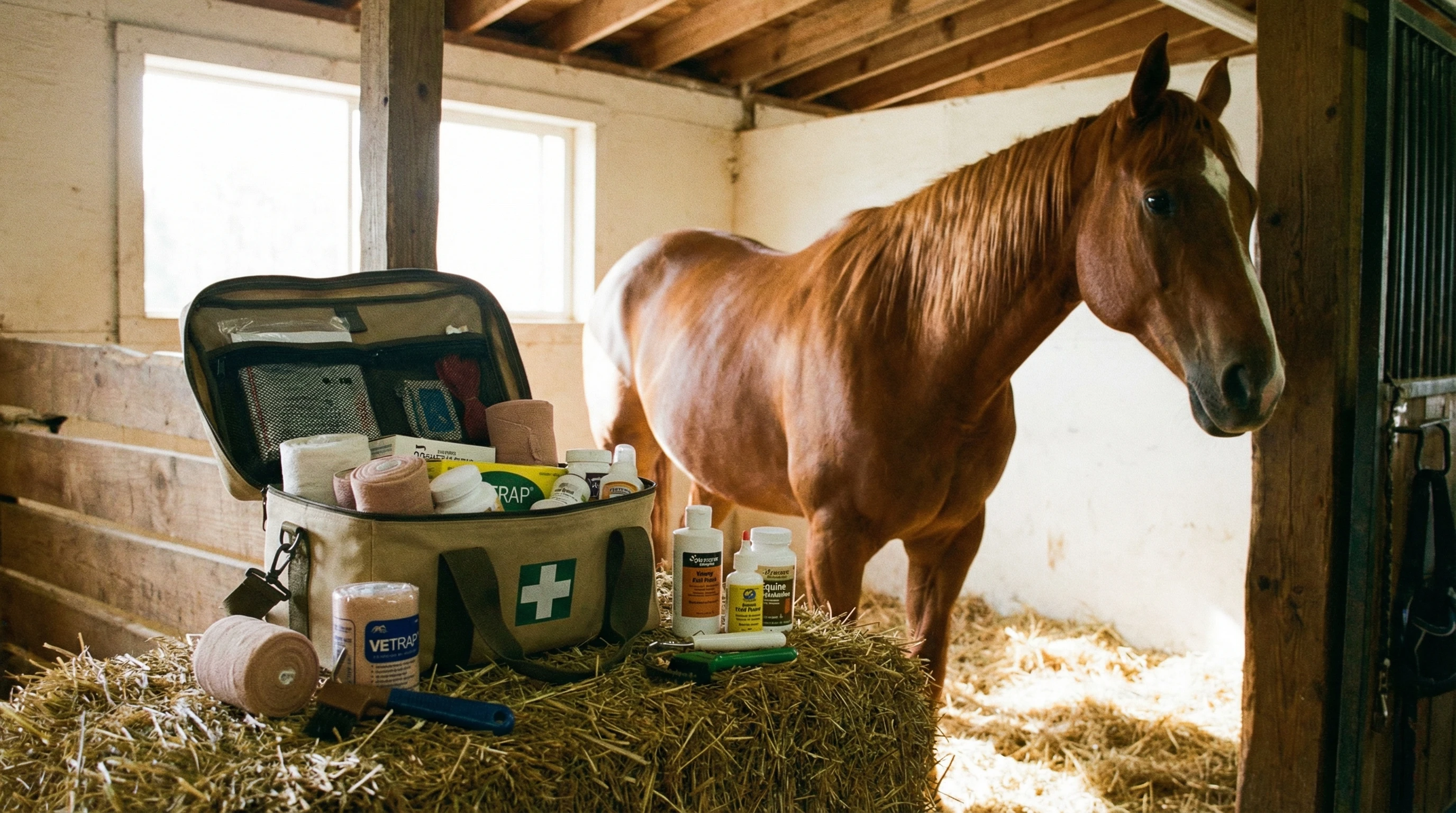
Every barn should have strong barn safety routines and a first aid kit kept up to date and within reach. Here’s what I recommend including in your kit:
- Nonstick wound pads and sterile gauze
- Vet wrap and adhesive bandages
- Medical scissors and a digital thermometer
- Latex or nitrile gloves
- Antiseptic solution (like diluted chlorhexidine or Betadine)
- Saline for rinsing wounds
- Hoof pick, flashlight, and extra batteries
- Contact numbers for your vet, farrier, and emergency haulers
Keeping your kit in an easy to grab container, and letting everyone at the barn know where it is, makes things less stressful in an emergency. I also suggest checking expiration dates now and then, rotating supplies as needed, and jotting down notes after each use so you don’t run out of important items later. Consider adding a checklist inside your kit—you’ll be glad you have it when you need to restock.
Also, do regular barn safety walk-throughs to inspect for hazards like loose boards, sharp edges, or clutter in high-traffic areas. A tidy, organized barn goes a long way toward avoiding injuries before they start. Encourage everyone who uses the barn to speak up if they notice a safety concern. Open communication keeps the environment safer for both horses and people.
Challenges Every Equine First Responder Faces
First response is not always easy. Sometimes an injured or frightened horse can be dangerous even when you’re trying to help. Here are a few common challenges and some ideas to overcome them:
- Horse Behavior: A horse in pain or shock may react unpredictably. Staying calm, moving slowly, and having someone else help if possible can make holding or treating the horse a lot safer.
- Lack of Supplies: It’s not unusual to grab your kit and realize you’re out of gauze or wrap. That’s why regular kit checks come in handy. I recommend keeping a written list for quick inventory after each use or monthly check.
- Panic and Stress: Even the most confident person might freeze in a high stress moment. Practicing scenarios, just like a fire drill, helps keep your mind and body ready to step in. Role playing with fellow barn members makes a world of difference.
- When to Call the Vet: Knowing your limits is actually a strength. If you’re ever unsure, a quick call to the vet can make all the difference. Never feel bad about asking for help or a second opinion.
By practicing, staying organized, and building a network with other horse folks and your vet, it’s easier to deal with these hurdles when they pop up. Remember, no one expects perfection. The goal is to do your best for the horse’s safety and comfort.
Frequently Asked Questions
Here are some common questions I get from horse owners after class:
How often should I take an equine first aid course?
Answer: I recommend a refresher every three years, as new techniques and research keep popping up. Repeating hands-on skills keeps them fresh in your mind.
What’s the biggest mistake horse owners make in emergencies?
Answer: A lot of people rush in without keeping themselves safe first. Always check for risks, like a panicked horse or slippery footing, before getting too close. Take a second to breathe and look around—you can’t help your horse if you get hurt.
Can I use people first aid supplies on horses?
Answer: Some basics, like gauze and tape, are fine. But certain products aren’t made for animals. It’s best to use horse specific antiseptics and always check with your vet if you’re unsure.
How do I know when something is an emergency?
Answer: If you see uncontrolled bleeding, rapid breathing, severe pain or lameness, or anything that makes you think “this isn’t normal,” call your vet. Trust your gut and lean toward caution. If you’re not sure, it never hurts to make a call.
The Impact of Equine First Aid Training
Ultimately, equine first aid courses give horse owners the knowledge and skills to be responsible, prepared caregivers. They promote safer barns, healthier horses, and more confident handling in stressful situations. These classes also help horse owners step up as leaders in their barn communities, passing along critical knowledge and keeping everyone better prepared.
From my perspective as an instructor, the most rewarding outcome is seeing owners leave class knowing they are better equipped to protect the horses they love when it matters most. By practicing, learning, and teaming up with vets, barn owners, and fellow horse lovers, you can make your barn a safer, happier place for everyone involved.