
Horse ownership comes with plenty of responsibility, and being ready for emergencies is one part you just can’t skip. If you have horses, an equine first aid kit should be at the top of your prep list. It’s not just about having the supplies; it’s about knowing what you need, how to use it, and when to call in the pros. Whether you’ve just brought home your first horse or you’ve been around barns for a while but are new to first aid, I’ve put together an equine first aid checklist for beginners that really covers the bases.
Why Every Horse Owner Needs a First Aid Checklist
Horses are pretty good at finding trouble whether it’s a scraped leg, a pulled shoe, or something far more serious. Being prepared makes emergencies a lot less stressful for you, and a lot safer for your horse. Having a solid equine first aid checklist saves you from scrambling to find what you need or realizing you don’t have the right supplies. Plus, knowing exactly what’s in your kit helps you act fast, even if you’re feeling panicked in the moment. For most typical horse injuries or health scares, a quick response can really make a difference, so stocking a barn first aid kit is something I recommend starting with right away. It also helps if others caring for your horse know what’s available. Communicate your setup to barn friends or staff so everyone is well prepared.
Equine First Aid Kit Basics
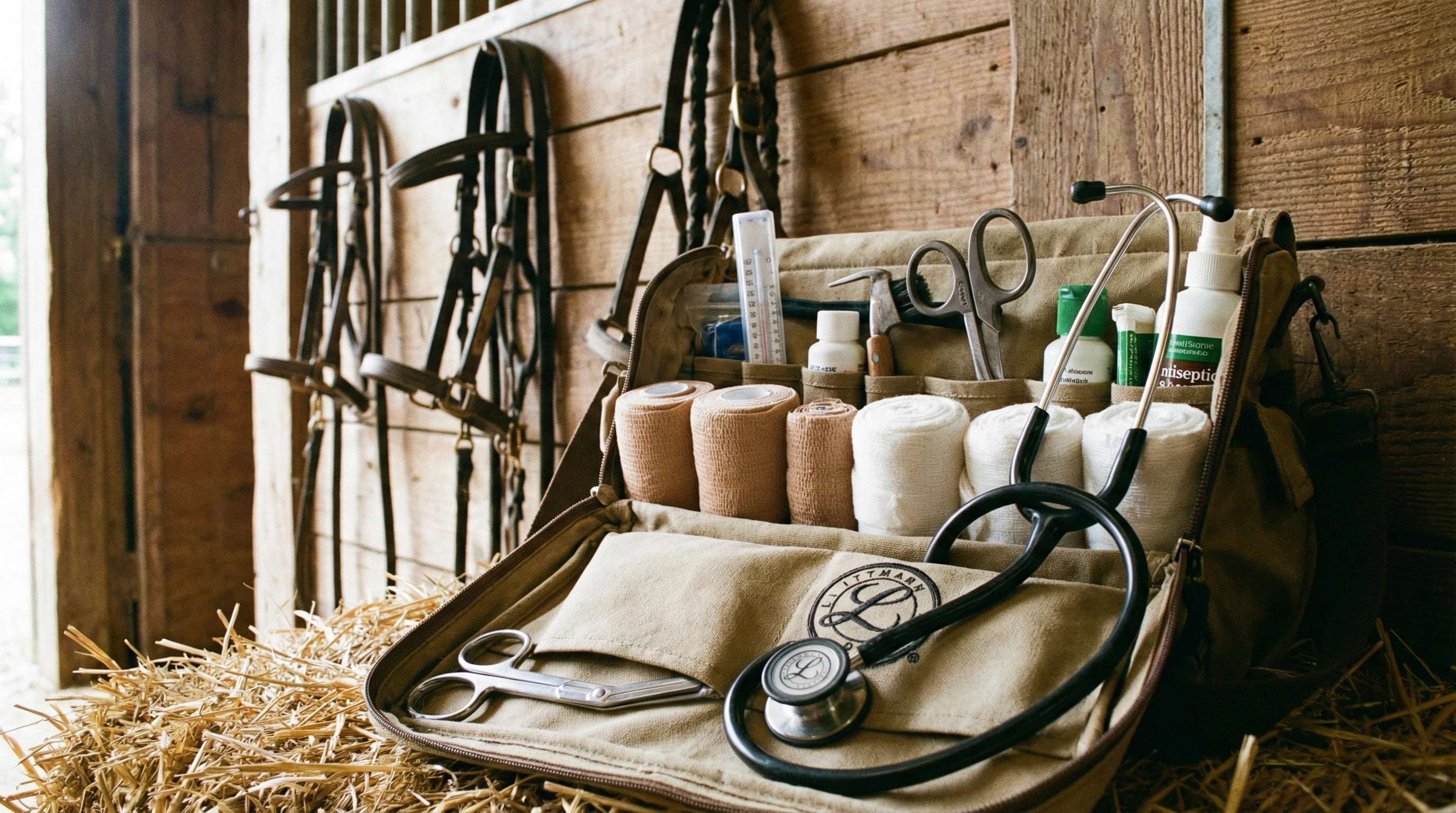
First things first: a basic first aid kit for horses is going to look a bit different than a human kit. Some supplies overlap (think bandages and antiseptics), but horses are big animals with specific needs. Here’s a practical list of items I always keep on hand:
- Thermometer: Digital or mercury; normal horse temp is 99.5–101.5°F (37.5–38.6°C)
- Stethoscope: Really useful for checking heart rate or gut sounds
- Scissors (blunt-ended): For safely cutting bandages and vet wrap
- Bandage materials: Gauze pads, cotton padding, cohesive wrap (like Vetrap®), elastic bandages, and selfadhesive wraps
- Antiseptic solution: Betadine, chlorhexidine, or povidoneiodine for wound cleaning
- Saline solution: For flushing out eyes and wounds
- Latex or nitrile gloves: Protects you and helps keep things sanitary
- Thermal/foil emergency blanket: Keeps a horse warm if shock sets in
- Hoof pick and hoof knife: Great for removing packed stones or checking hoof injuries
- Tweezers: For picking out splinters or small debris
- Instant cold packs: For cooling minor injuries right away
- Clean towels and washcloths: Pretty handy for basic wound care and general cleanup
- Large syringe (no needle): Useful for flushing wounds or giving oral meds
- Flashlight or headlamp: Not just for finding things at night, but for inspecting wounds in low light
If you’re shopping for these supplies, I’d recommend checking local farm stores or online shops that specialize in equestrian products. Keeping your kit in a sturdy plastic box or tote makes it portable and easy to keep organized. Consider waterproof containers for outdoor storage or travel, especially if you move between barns or head to shows.
Building Confidence: Knowing How to Use Your First Aid Supplies
Stocking the right supplies is only half the job. Knowing how to use them is really important. If you pick up a stethoscope, make sure you learn how to listen for a horse’s heart rate and gut sounds. Practice wrapping a standing bandage or quick action wrap on your horse before you ever need to do it in an emergency. Understanding normal horse vital signs (temperature, heart rate, and respiration) helps you spot problems early. For most adult horses:
- Normal heart rate: 30–40 beats per minute
- Normal respiratory rate: 12–20 breaths per minute
- Normal temperature: 99.5–101.5°F (37.5–38.6°C)
I keep a laminated “vital signs” card in my kit for quick reference. And don’t be afraid to ask your vet to show you how to use things like wound cleaners, bandages, or syringes. They’re usually happy to walk you through basic first aid steps during routine visits. Local riding clubs or 4H groups sometimes host hands-on clinics for equine first aid or host your own with an Equi-First Aid Instructor like myself. Jump into these if you can to build your skill set in a safe, supportive environment.
Common Horse Emergencies and How to Respond
Beginning horse owners face a handful of recurring health issues. Here are some you’re likely to run into, with tips to get you started on your first aid response:
- Minor Cuts and Scrapes: Clean with saline or antiseptic, stop the bleeding, cover with sterile gauze, and call the vet for anything deep or near a joint. Watch for redness or discharge after.
- Puncture Wounds: Don’t pull out embedded objects, and call your vet! Keep the horse calm, and prevent further damage until help arrives.
- Hoof Injuries: If a nail or rock gets lodged, you can use your hoof pick or knife (gently), and wash with saline. If it’s deep or bleeding, call the vet. Booting or bandaging the hoof until the vet examines it can help prevent infection.
- Colic: This is severe belly pain, so take baseline vital signs, keep the horse calm, no food or water, and get your vet on the phone fast.
- Eye Injuries: Flush gently with saline, avoid rubbing, and always call the vet for any eye issue. It’s not worth waiting because eyes can worsen quickly.
- Lameness or Swelling: If you find heat or swelling after a kick or twist, cold hose and call your vet for evaluation. Sometimes stall rest is needed, so be sure your kit has enough supplies for ongoing care.
It’s always a good idea to keep your vet’s phone number saved in your phone and taped to your first aid kit, just in case. I also include names of backup contacts and driving directions to the nearest equine hospital. Updating this info after every move or barn change helps avoid confusion during emergencies.
Extra Tips for Organizing Your Barn First Aid Kit
Organization makes everything easier, especially when the pressure is on. I recommend splitting up horse first aid supplies into a couple of main sections: wound care, bandages/wraps, instruments (scissors, thermometer), and medications. Use small containers (I like these) or ziplock bags to keep things tidy. Having duplicates (like two thermometers) prevents trouble if one breaks. And don’t forget to check your kit every few months, replacing anything that’s expired or missing.
Label everything clearly and keep instructions for key items (like how to apply a hoof poultice) tucked in the box. If allergies or chronic health issues could affect treatment, note them too. This is super useful in case you’re not there and someone else needs to help your horse. For larger barns, a shared whiteboard or clipboard listing vet contacts, kit location, and allergy notes is great for team communication.
Supplies Not to Forget: Beyond the Basics
Once you feel comfortable with the essentials, there are a few extra items that make a first aid kit even more complete. Here are some things I find really helpful in my own kit:
- Electrolyte paste: Replace lost minerals after heavy exertion or on hot days
- Zinc oxide ointment: A barrier cream for sensitive skin or small wounds
- Fly repellent (nonstinging): Especially around wounds in summer
- Spare halter and lead rope: Horses in pain may panic; having an extra set nearby can be a lifesaver
- Notebook and pen: Document symptoms, times, and vital signs for your vet
- Duct tape: Useful for makeshift hoof bandages or reinforcing wraps if a horse is especially active.
- Plastic garbage bags: Handy for cleanup or covering wounds in rain
If you compete or travel with your horse, packing a “travel sized” version of your first aid kit can give peace of mind wherever you are. Adjust the contents based on the horse’s age, health, and any known allergies. Travel kits may skip heavy items like large towels but should always include essentials for wounds and basic monitoring.
Practical Advice for New Horse Owners
Getting comfortable handling first aid equipment builds both skill and confidence. Do practice sessions with safe horses, watch tutorials, or ask an experienced horse friend to demo steps like taking a temperature or wrapping a leg. Don’t feel awkward for double checking steps or calling your vet if you’re just not sure. Prevention and good communication go a long way. I keep my kit by my stalls, but some folks use a tote that moves easily from barn to trailer; accessibility is key since you never know where you’ll need it.
For anyone looking for reliable information, Equi-First Aid USA offers hands-on clinics across the country. Another good source is the American Association of Equine Practitioners (AAEP), it is packed with practical resources, including webinars and articles.
Frequently Asked Questions
What’s the most important item in a horse first aid kit?
If I had to pick just one, a thermometer is where I’d start. Spotting a fever early can mean catching serious illness before it gets worse, but honestly, a well rounded kit is always better.
Can I use human first aid supplies on my horse?
Some basics like gauze and wraps are fine, but always choose equine approved medications and disinfectants. Some products that are safe for people really aren’t safe for horses. Check labels and when in doubt, ask your veterinarian before using any unfamiliar product.
How do I know when to call the vet?
If you’re not sure, call! Anything deep, bleeding heavily, involving the eyes or joints, or with signs of shock, swelling, or severe lameness needs professional help right away. It’s better to ask an “unnecessary” question than miss something serious.
Final Thoughts
Getting started with equine first aid doesn’t need to be intimidating. Building a checklist, stocking supplies, and learning some simple skills helps you take really good care of your horse, no matter what happens. Preparedness gives you peace of mind, and the right kit makes all the difference when things get stressful. Even experienced horse folks keep learning new things, so keep adding to your knowledge and update your kit as you go. Your horse will thank you for it!